





























 Back
Back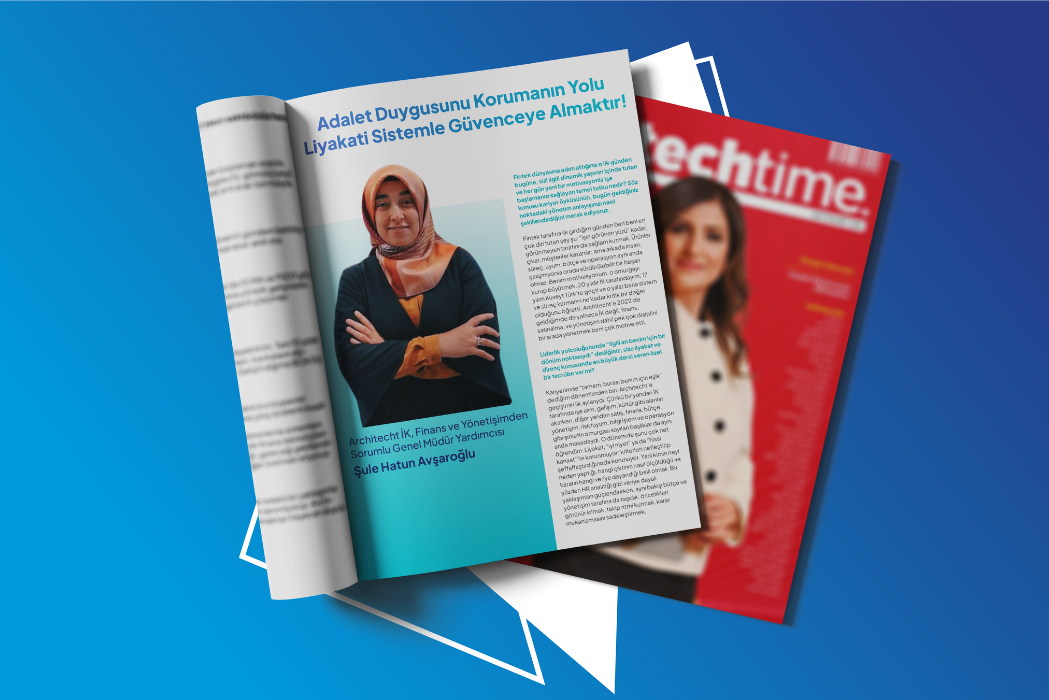
Fintechtime Magazine - March
From the very first day you stepped into the fintech world until today, what is the core passion that keeps you engaged in this dynamic environment and enables you to start each day with renewed motivation? We are curious about how this career story has shaped your current management approach.
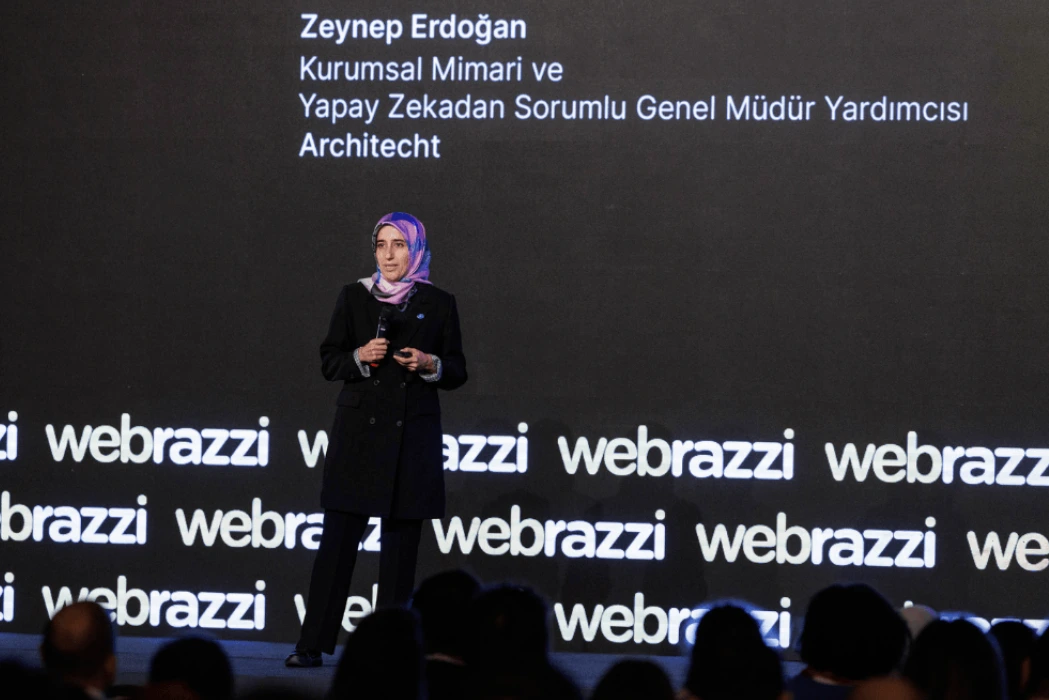
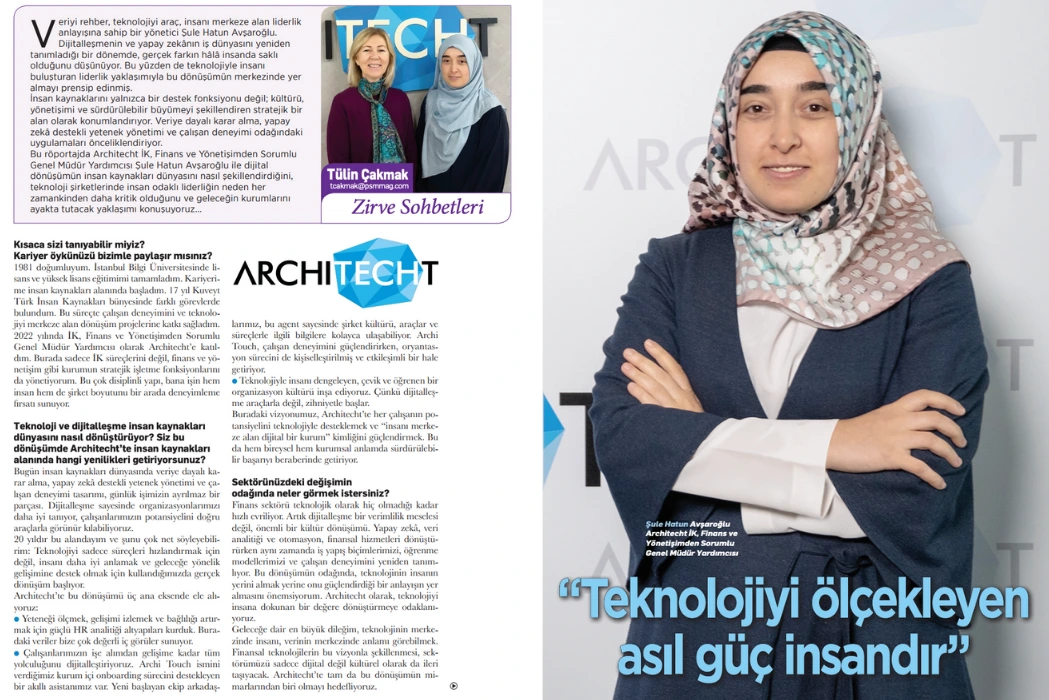
Since the first day I entered the fintech field, what has kept me most alive is this: establishing the invisible side of the work as solidly as the visible side. Products are launched, customers are gained; but if people, processes, compliance, budget and operations are not running simultaneously in the background, there can be no sustainable success. My motivation is to build and grow that backbone. I've been on the HR side for 20 years; 17 of those years were at Kuveyt Türk, and those years taught me how critical it is to build systems and processes. When I joined Architecht in 2022, what motivated me greatly was managing not only HR but also many disciplines together, including finance, procurement and governance.
My management style comes from here: getting to know teams closely, looking at data and digitalizing the work as much as possible. On the HR side, for example; I care about digitalizing the entire journey from recruitment to development, strengthening decisions through HR analytics, and making onboarding smoother with a smart assistant. On the learning side, simply saying “we gave training” is not enough; learning must be transformed into a continuous, measurable form that touches business outcomes. That’s where the real difference lies for me.
On the finance and governance side, the same perspective applies: predictability and traceability. In budgeting, being able to see the answer to “where is the money going?” from a single screen, discussing priorities in projects based on data rather than emotion, and ensuring that approval and authorization mechanisms leave no gray areas are extremely important to me. Governance can sometimes be seen from the outside as “slowing things down,” but when it is well built, it actually accelerates the organization; because everyone knows what they will do, when and within which framework. In the risk and compliance area, my goal is not to add control later but to design the work correctly from the beginning, so we can move into the future with more confident steps.
In your leadership journey, is there a specific experience that you consider a turning point—one that taught you the biggest lesson about merit and resilience?
One of the periods in my career when I said, “Okay, this is a threshold for me,” was the first months of my transition to Architecht. Because while recruitment, development and culture were progressing on the HR side, at the same time topics considered the backbone of the company—such as sales, finance, budgeting, governance, risk/compliance, IT and operations—were also on the table. During that period, I learned this very clearly: Merit is not protected by “good intentions” or “subjective opinions”; it is protected when criteria are clarified and made transparent. In other words, it must be clear who does what and why, how outputs are measured, and which data decisions are based on. Therefore, while strengthening data-based approaches such as HR analytics, we carried the same perspective to budgeting and governance: making priorities visible, establishing a tracking rhythm and simplifying decision mechanisms.
The biggest lesson I learned on the resilience side was this: When trying to keep up with too many agendas at the same time, the natural reflex is “more control”; but in a growing structure, what is sustainable is not increasing control, but improving processes and improving the system. Approaches such as making learning continuous and measurable, linking impact to business results, are critical for us for exactly this reason. In short, that period taught me this: The way to protect the sense of justice is to safeguard merit with the system, and the way to stay strong is not to try to carry the load alone but to run the work together with the team through the right mechanisms.
Looking back today, what would you say to young women who want to build a career in financial technologies but are hesitant due to "glass ceilings"? Beyond cliché advice, what realistic guidance would you offer?
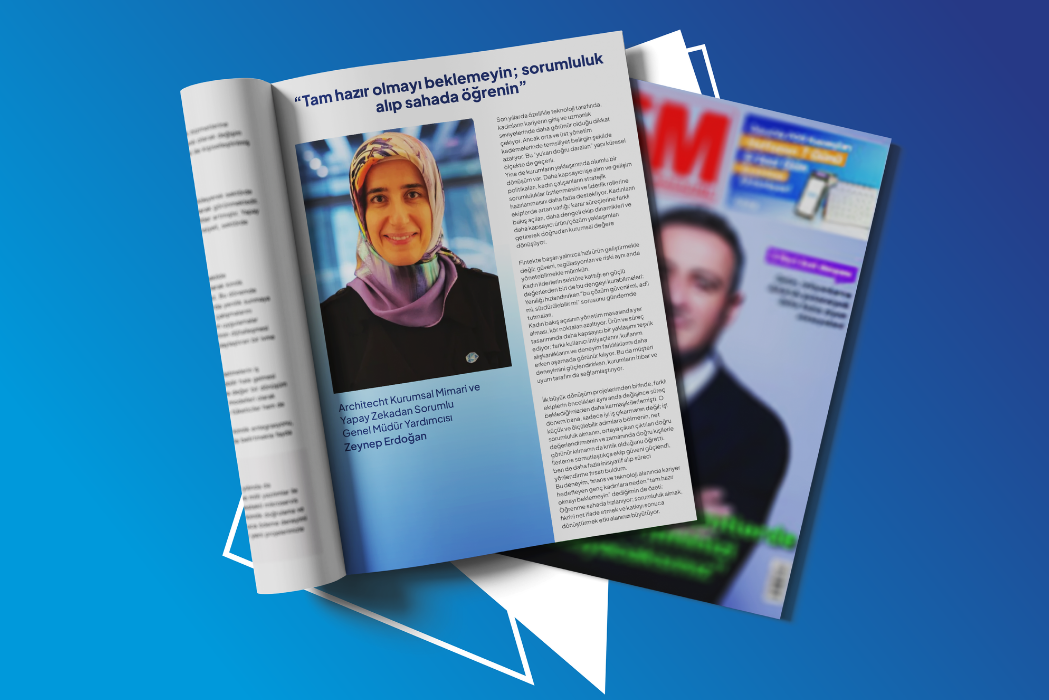
Yes, the concern about glass ceilings in our sector is real—I accept this, and I do not underestimate it. But I also learned this: What is most challenging is often not a single “wall,” but uncertainty and invisible rules. Make your output visible. Being able to say “I delivered this, I improved that,” instead of “I’m working very hard” changes the course of things. Rather than focusing on when and to which career step you will arrive, focusing on what you did differently today and what value you produced is, in my opinion, much more valuable. Because successful results and differentiating projects can open new doors for you one day even if you do not explicitly request them. I wholeheartedly believe this.
Reading the future correctly, addressing the transformation of technology and business accurately is also critical. Believing that we can succeed in every field is crucial. In this world where business and technology are rapidly transforming, we are obliged to invest in our personal development. Not only behavioral competency development but also improving our professional skills through the use of new technologies. Only in this way can we draw different routes for ourselves and become more visionary leaders for the future.
Finally, I have seen this for years: This work does not run solely by knowing the technical side; people who can translate between technology and the language of business differentiate very quickly. So do not confine yourself to a single area; stay on the side that understands finance, risk, governance and the customer. What helps me most today while managing different disciplines at the same time is this holistic perspective.
When you think about the most exciting project on your agenda for 2026 and beyond, how would you describe in a few words the most critical role women will play in building this future?
Looking at 2026 and beyond, one of the things that excites me the most is following artificial intelligence at global standards with the Disruptive Technologies team and transforming “everyone’s work” within Architecht. In other words, turning AI not into just a technology experiment, but into a structure that directly affects efficiency, quality and business results, is measurable and scalable. That’s why we clearly define our vision: “To become the most trusted business partner leading AI transformation in financial technology.” To support this, we prioritize moving in the same direction across all layers of the organization with development steps such as BIZTech—strengthening the common language—and AI4BİZ—aiming to spread AI into roles.
When it comes to the most critical role women will play in building this future, it is difficult to describe it in “a single word,” but I would put it like this: courage, empathy and balance for transformation. Being able to take bold steps for both team and company transformation will enable us to progress into the future with more confident steps. Empathy: turning technology into a value that truly touches the user, the team and the customer—because the sense of trust in fintech is a fine line. Balance: being able to carry speed and control simultaneously; pushing innovation but not adding risk/compliance and governance later like a “patch.” These are the capabilities I have most needed over the years while trying to manage people, work and systems together.