





























 Back
Back
Data is no longer merely growing. It is multiplying. And this multiplication is not linear, but geometric.
In 2010, the total amount of data produced worldwide was approximately 2 zettabytes. By 2020, it had risen to 64 zettabytes. Projections for 2028 point to more than 350 zettabytes. Yet the real issue is not the volume of stored data. The real issue is the intensity with which this data is processed. In the age of artificial intelligence, data does not simply accumulate. It constantly operates. It is trained, retrained, simulated, compared, and recalculated again and again.
Training an advanced language model can take weeks using tens of thousands of graphics processing units. A single large model may consume millions of compute hours and between 1 and 5 gigawatt-hours of energy. This is equivalent to the annual electricity consumption of thousands of households. Moreover, this is not a one-time cost. Every update and every new version requires more computation and more electricity. The system gradually becomes a structure that continuously expands its own energy demand.
Today, more than 8,000 data centers operate worldwide to process this data. The number of hyperscale data centers was around 250 in 2015. By 2025 it surpassed 1,000. Each operates with at least 100 megawatts of capacity. Some newly planned artificial intelligence campuses in the United States are approaching the 1 gigawatt level. One gigawatt is roughly equivalent to the generation capacity of a medium-sized nuclear power plant.
According to the International Energy Agency, data centers accounted for about 2 percent of global electricity consumption in 2022. This corresponds to roughly 460 terawatt-hours. Scenarios for 2030 suggest this consumption could rise to between 800 and 1,000 terawatt-hours. That is close to Japan’s annual electricity consumption.
Artificial intelligence workloads are far more demanding than conventional systems. A traditional server rack consumes around 5 to 10 kilowatts, while GPU racks designed for AI can reach 50 to 100 kilowatts. This means not only more electricity but also intense heat. As a result, liquid-based cooling systems are becoming widespread. Cooling requires large amounts of water. At a time when global water resources are declining, digital systems are increasing their water consumption. The energy crisis is now accompanied by mounting pressure on water resources.
Energy demand is rising rapidly. But where will this energy come from?
Around 60 percent of global electricity generation still relies on fossil sources such as coal, natural gas, and oil. Investments in renewable energy are increasing, but total demand is growing even faster. According to projections by the International Energy Agency, global electricity demand will increase by roughly 25 percent by 2030. A significant share of this growth will come from digital infrastructure. If renewable capacity does not expand at the same pace, additional natural gas and coal investments will become inevitable to maintain uninterrupted supply.
In some countries today, there are discussions about keeping coal plants open longer than planned to power data centers. In Europe, permits for new natural gas plants are accelerating. Global competition in artificial intelligence is beginning to take precedence over carbon reduction goals. Energy is increasingly being allocated to technology before climate considerations.
This situation creates a clear contradiction with the Sustainable Development Goals adopted in 2015. Goals such as poverty reduction, access to clean energy, climate action, and responsible production come under pressure as energy priorities shift toward data centers. If electricity generation begins to be shaped primarily by the needs of machines and human-centered development is pushed aside, sustainability targets risk being effectively suspended.
At this point, quantum technologies emerge as a potential source of hope.
Quantum computers have the potential to solve complex problems that classical systems struggle to handle. They may enable breakthroughs in areas such as efficient energy grid planning, next-generation batteries, superconducting materials, and fusion reactions. In theory, a major transformation in energy efficiency is possible.
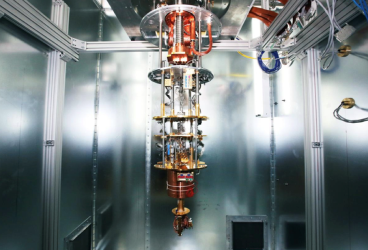
However, current quantum systems remain limited in capacity and suffer from high error rates. They require operating temperatures close to absolute zero in order to function. This means massive cooling infrastructure and high energy consumption. Moreover, this technology has not yet been widely deployed for societal use. The United States, China, and the European Union are investing billions of dollars in quantum research. Yet much of this investment is progressing under national security frameworks. Applications capable of fundamentally solving energy challenges are not yet operational.
The emerging picture is clear.
Data is expanding geometrically. Data centers are multiplying. Electricity demand is surging. Energy production continues to rely heavily on fossil sources. Sustainability targets are under pressure. Quantum technologies promise the future but do not resolve today’s problems.
This is not merely a technical issue. It is a civilizational choice.
To whom will energy be allocated? To humans or to machines? For whom will production take place? For society or for the system?
As technology advances, humans are gradually moving away from the center of production. A capital-intensive growth model with limited employment gains strength. While energy is increasingly allocated to machines, the share available to people narrows. As energy costs rise, access to basic needs becomes more difficult. Income inequality deepens. Social fragility grows.
The real risk lies here.
We are not only consuming more electricity. We are also redefining our priorities for development. If energy systems are shaped primarily by the needs of digital infrastructure and human welfare becomes secondary, we will leave two heavy legacies to future generations. The first is environmental: rising carbon emissions, accelerating climate change, and diminishing natural resources. The second is social: deepening inequality and a growth model that has lost its meaning.
The real cost of the data age will not be measured only in terawatt-hours. It will also be measured in social stability, ecological balance, and human dignity.
Yet another path is possible.
It is possible to adopt an approach that sees energy not merely as the fuel of growth but as a trust. It is possible to use technology not only for speed but also for justice. It is possible to guide capital not only toward financial returns but toward social benefit.
If the financial system redefines energy investments within a human-centered framework, prioritizing renewable resources, efficiency, local production, and social value, a balance between digital transformation and sustainability can be established. The tension between profit and responsibility can be transformed into harmony through deliberate choices.
True development is not about processing more data. True development is about producing while keeping humanity at the center. If energy investments, technology strategies, and financial decisions are shaped around this principle, a fair future can still be built in the age of artificial intelligence.
The decision we make today is not only about which energy source we will use, but also about which values we will live by.
A faster world is possible.
But a more just world is a matter of choice.