




























 Back
Back
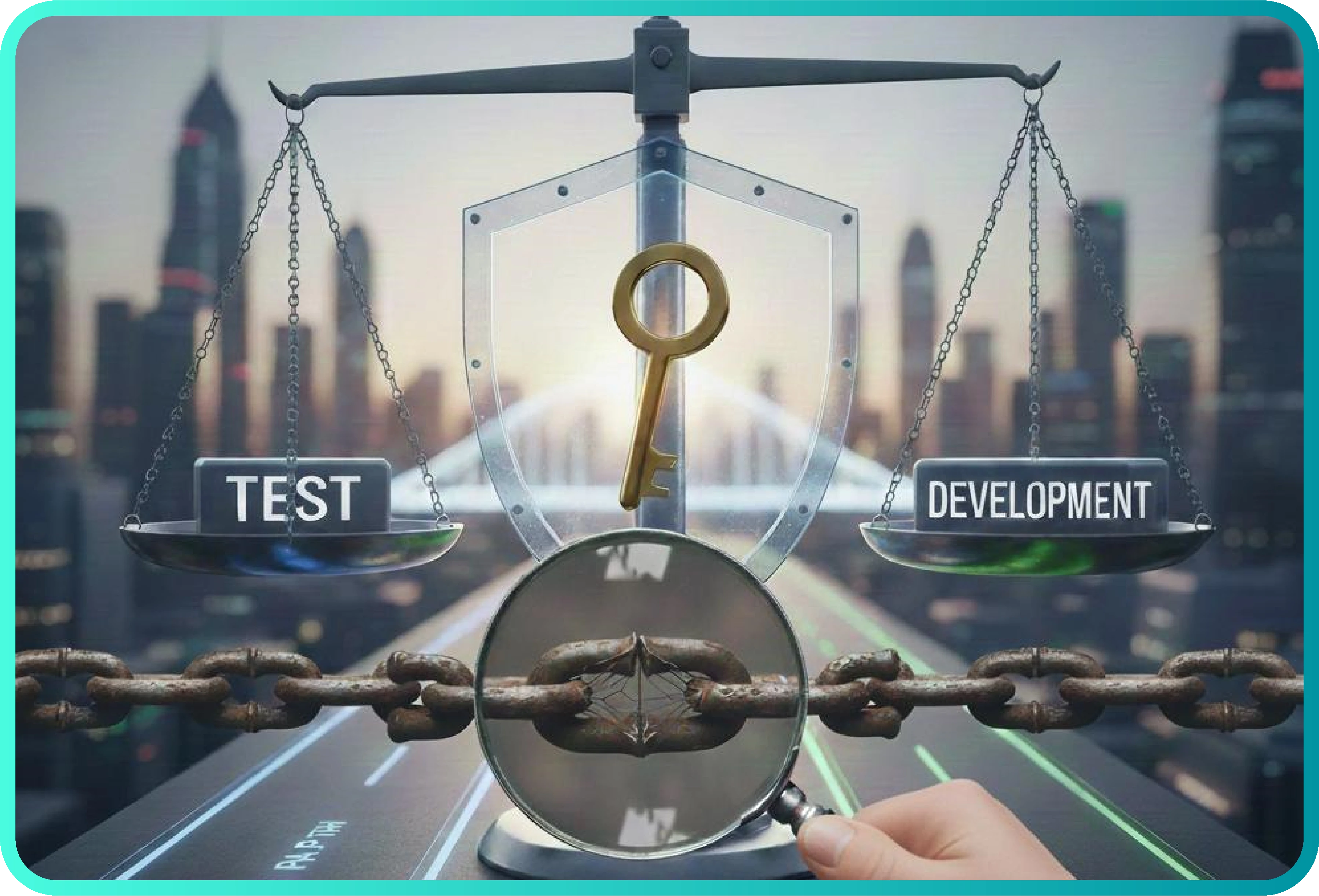
Writing Tests with AI Is Easier, but Test Quality Is Still Human-Driven: The Evolution of the QA Role in the Agile World
In recent years, one of the most significant transformations in the software industry has occurred in testing processes. With the widespread adoption of generative artificial intelligence (AI) tools, writing tests has largely ceased to be a task that requires advanced technical expertise. Today, with only a few lines of prompt, application programming interface (API) tests, user interface (UI) automation scenarios, and unit tests can be generated within seconds. These developments naturally raise an important question: If everyone can now write tests, are test engineers still necessary?
Studies in the literature and industry reports indicate that the automation of test generation is not equivalent to the management of test quality. In this context, the key distinction lies between writing tests and identifying the right tests.
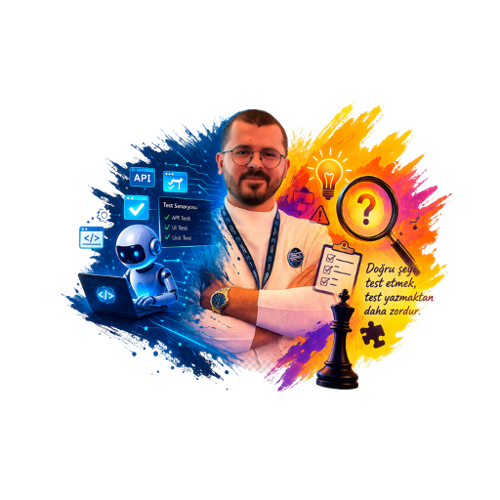
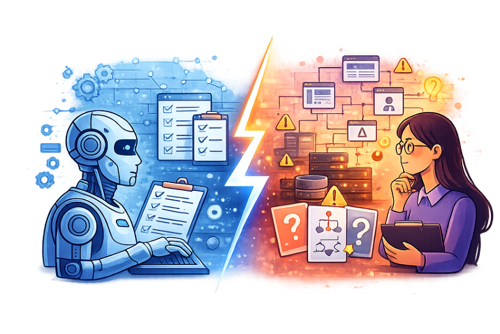
AI Can Generate Tests, but Its Contextual Understanding Is Limited
Current AI tools provide high efficiency in test generation. When provided with a service definition or a user flow, these systems can quickly produce test scenarios and generate automation code. However, one of the most critical limitations in this process is contextual understanding.
AI systems:
- Have limited capability in interpreting business rules
- Cannot realistically model complex user behaviors
- Struggle to prioritize product risks effectively
For example, in a payment system, AI can easily generate standard test cases such as successful payment, invalid card scenarios, or timeout conditions. However, it often fails to consider more complex situations such as:
- Concurrent transactions initiated by the same user from different devices
- Data inconsistencies occurring even when the system returns a successful response
These scenarios require not only technical validation but also a deep understanding of product behavior and risk impact, highlighting the continued importance of human involvement in testing.
Agile Theory vs. Real-World Practice
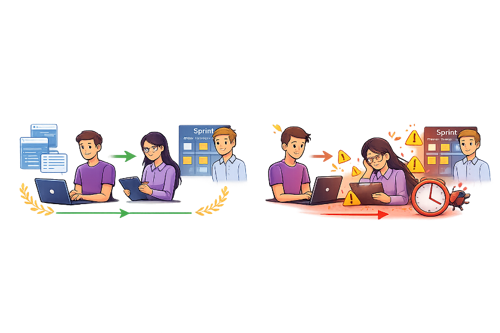
The commonly cited Agile principle, “Quality is everyone’s responsibility,” theoretically promotes shared ownership of quality across the team. However, in practice, many teams still follow a more linear workflow: development is completed first, followed by testing, and the sprint concludes accordingly.
As a result:
- Quality assurance is postponed to the final stages of development
- The cost of defect detection increases
- The QA role becomes reactive rather than proactive
This gap clearly illustrates the difference between Agile principles and their real-world implementation.
To What Extent Does AI Address This Problem?
Current evidence suggests that while AI accelerates test generation, it does not directly solve the fundamental challenges within Agile processes. The core issue remains the accurate identification of what should be tested.
AI tools:
- Can generate test cases
- Cannot establish a comprehensive test strategy
- Do not perform effective risk prioritization
- Lack the ability to assess business impact
Therefore, AI should be considered a powerful supporting tool rather than an independent decision-making system. Its effectiveness largely depends on how it is guided and utilized.
QA Mindset: From Bug Detection to Risk Awareness
A common misconception in software testing is that QA is primarily responsible for finding bugs. In reality, the true value of QA lies not only in detecting defects but also in anticipating potential risks before they occur.
For instance:
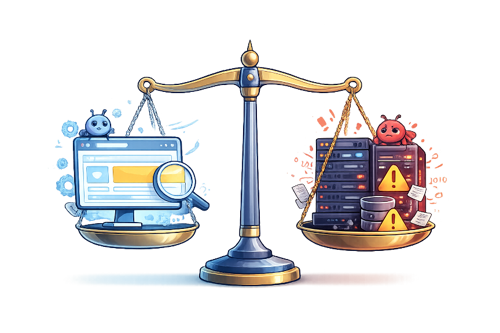
- A UI color issue may represent a low-impact problem
- A backend data loss scenario can have critical business consequences
Accurately distinguishing between such cases requires not only technical expertise but also experience, domain knowledge, and system-level thinking.
The Automation Misconception: More Tests ≠ Higher Quality
In many organizations, there is a widespread belief that higher test coverage directly equates to higher quality. However, research and industry observations suggest otherwise.
- Incorrect scenarios can be fully tested
- Critical scenarios may remain completely untested
With the rise of AI-generated tests, this issue becomes even more pronounced, as the ease of test creation may shift focus from quality to quantity.
The Evolution of the QA Role
When AI and Agile are considered together, it becomes evident that the QA role is undergoing a significant transformation. QA is no longer limited to writing tests; it is evolving into a role responsible for managing quality, analyzing risks, and evaluating overall product behavior.
Modern QA requires:
- Risk-oriented thinking
- System-wide analysis capabilities
- Ownership of product quality
From this perspective, the central question shifts from “Does it work?” to “Is it truly ready?”
Future Outlook
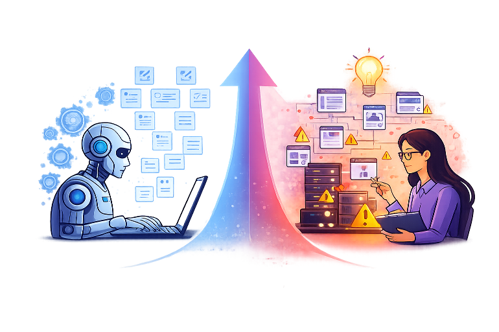
Current research suggests that AI will not eliminate the QA role but will instead reshape it. As test generation becomes increasingly automated, roles focused solely on writing tests are likely to diminish.
In contrast, the following competencies will become more valuable:
- System thinking
- Risk analysis
- Product-oriented mindset
- The ability to effectively guide AI systems
Conclusion
While AI has significantly simplified the process of writing tests, identifying the right scenarios, asking the right questions, and recognizing critical risks remain inherently human-driven activities.
In this context, AI should be seen not as a replacement for QA, but as a transformative force that redefines its role. The QA professionals who will stand out in the future are those who not only generate tests but also manage quality and make informed decisions.
References
- World Quality Report 2023–2024, Capgemini
- Agile Testing – Lisa Crispin & Janet Gregory
- ISTQB Test Automation Engineer Syllabus
- IEEE Software – AI in Software Testing
- Martin Fowler – Continuous Integration
- Chat GPT – Image Generation