




























 Back
Back
BOA’s .NET Modernization Journey: Why We Started, What We Changed, and Where We Are Today
We are living in a time when competition in the financial sector is increasing rapidly and customer expectations are constantly rising. Today, core banking systems must not only function properly; they must also be fast, flexible, secure, cloud-compatible, and future-ready.
As Architecht, we embarked on a comprehensive modernization journey to move the BOA Banking and Technology Platform—which has been powering Kuveyt Türk and other financial institutions for more than 15 years—into a new technological era. In this blog post, I would like to summarize why we initiated the .NET transformation in this modernization journey, what we changed, and the level we have reached today.
Why Did We Start This Project?
Since 2009, BOA has been a powerful and comprehensive platform at the heart of banking operations. However, over the past 15 years, the technology landscape has undergone a tremendous transformation. Continuous renewal has become essential to maintain a modern infrastructure.
Since 2019, BOA had been running on .NET Framework 4.8 with a WCF-based architecture. For more than twenty years, .NET Framework provided a strong foundation for enterprise software development. However, the ecosystem has shifted significantly—especially with the introduction of .NET Core.
With .NET 5 and subsequent versions, developers are provided with platform independence, higher performance, modern security standards, and a lightweight runtime architecture. Today, Microsoft recommends the new-generation .NET versions for server-side development.
Support for .NET Framework 4.6.1 and earlier versions has completely ended, and version 4.8 is also expected to fall out of support in the future. Therefore, migrating large-scale systems running on legacy frameworks to modern .NET versions is not merely a technical preference; it is a necessity for sustainability and security.
Since BOA is expected to remain in service for many more years, a sustainable modernization strategy became essential. For this reason, we initiated a comprehensive transformation process to migrate BOA from .NET Framework 4.8 to .NET 8.
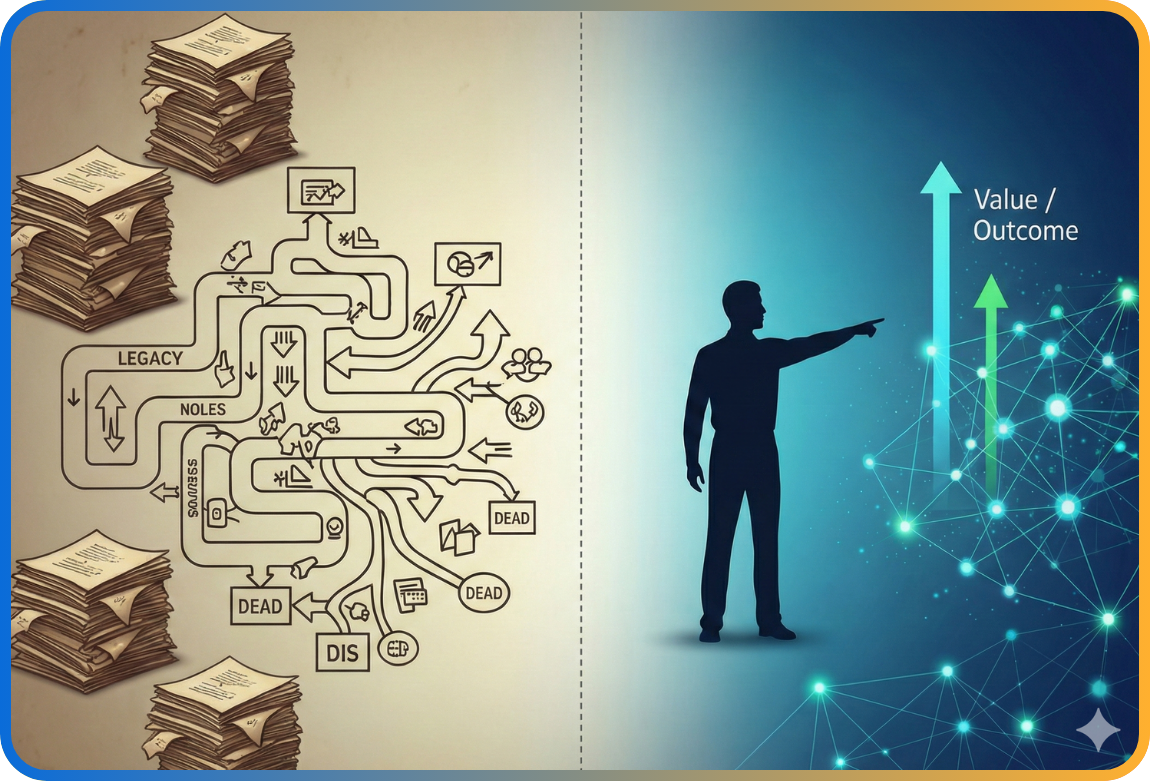
This transformation was not just a version upgrade; it was a strategic modernization initiative delivering platform independence, scalability, performance improvements, and enhanced security. The tightly Windows-dependent architecture evolved into an operating system–independent structure compatible with cloud and container infrastructures. This transition enabled cost optimization through reduced licensing costs and improved operational efficiency. Additionally, modern cryptography, an up-to-date runtime, and active vendor support strengthened protection against evolving threats.
Another factor increasing the significance of this project was that such a large-scale transformation had not previously been carried out in the Turkish banking sector. Conducted as an R&D project under Teknopark Istanbul, this initiative was not a greenfield project built from scratch. BOA continued running live while we progressed with a multi-phase architectural transformation strategy. This approach enabled zero downtime throughout the process while maintaining backward compatibility during the transition.
What Did We Change on This Journey?
We designed modernization not as a “big bang” approach, but as a gradual and risk-controlled transformation. To achieve this, we implemented a multi-layered migration strategy.
We renewed the core of the architecture by migrating from WCF to ASP.NET Core Web API. Communication was transformed from a binary-based protocol to a modern REST and JSON-based integration model.
We established a multi-target supported transition model. By migrating core libraries to .NET Standard 2.0 during the transition phase, we ensured compatibility with both .NET Framework 4.8 and .NET 8. This enabled both environments to operate in parallel for a period of time.
Modules that were modernized ran on .NET 8, while modules yet to be migrated continued operating seamlessly on .NET Framework 4.8. We also developed a dynamic rollback mechanism that allowed specific endpoints to be instantly switched back to the legacy environment when needed.
Naturally, we implemented many additional infrastructural improvements throughout the process. Most importantly, this entire modernization was carried out on a live production system with zero downtime.
Where Are We Today?
The outcomes of the modernization process are clearly reflected both in technical metrics and in the system’s overall behavior. Measurements show up to a 25% improvement in request processing times and CPU utilization. In addition, BOA’s stability under load and its overall operational rhythm have visibly strengthened.
The value of this transformation goes beyond numerical gains. This was more than a version upgrade—it was a strategic investment in BOA’s long-term future.
Today, BOA is not only faster and more secure, but also built on a strong technical foundation that is open to change, ready to scale, and capable of embracing new technologies. With a platform-independent architecture and container compatibility, BOA now operates within a more secure and sustainable ecosystem supported by modern cryptography, an up-to-date runtime, and a robust API communication model.
This modernization also serves as a significant example of how large-scale, mission-critical systems in the banking sector can be transformed incrementally, safely, and without interruptions.
With the right strategy, controlled steps, and strong teamwork, it is possible to transform a living system without stopping it. And when modernization is built on the right foundations, it becomes not a one-time improvement, but a long-term organizational capability.