




























 Back
Back
What Is Open Finance? The Evolution of Open Banking
The financial sector has been undergoing a profound transformation in recent years, driven by data sharing and platform-based business models. The evolution of banking from closed systems to API-driven, collaborative ecosystems is redefining financial services. While open banking was the first step in this transformation, a broader paradigm has now emerged: open finance.
The focus is no longer limited to the sharing of banking data. Instead, a new model is taking shape in which an individual's entire financial ecosystem can be accessed and utilized securely and under their control.
What Is Open Finance?
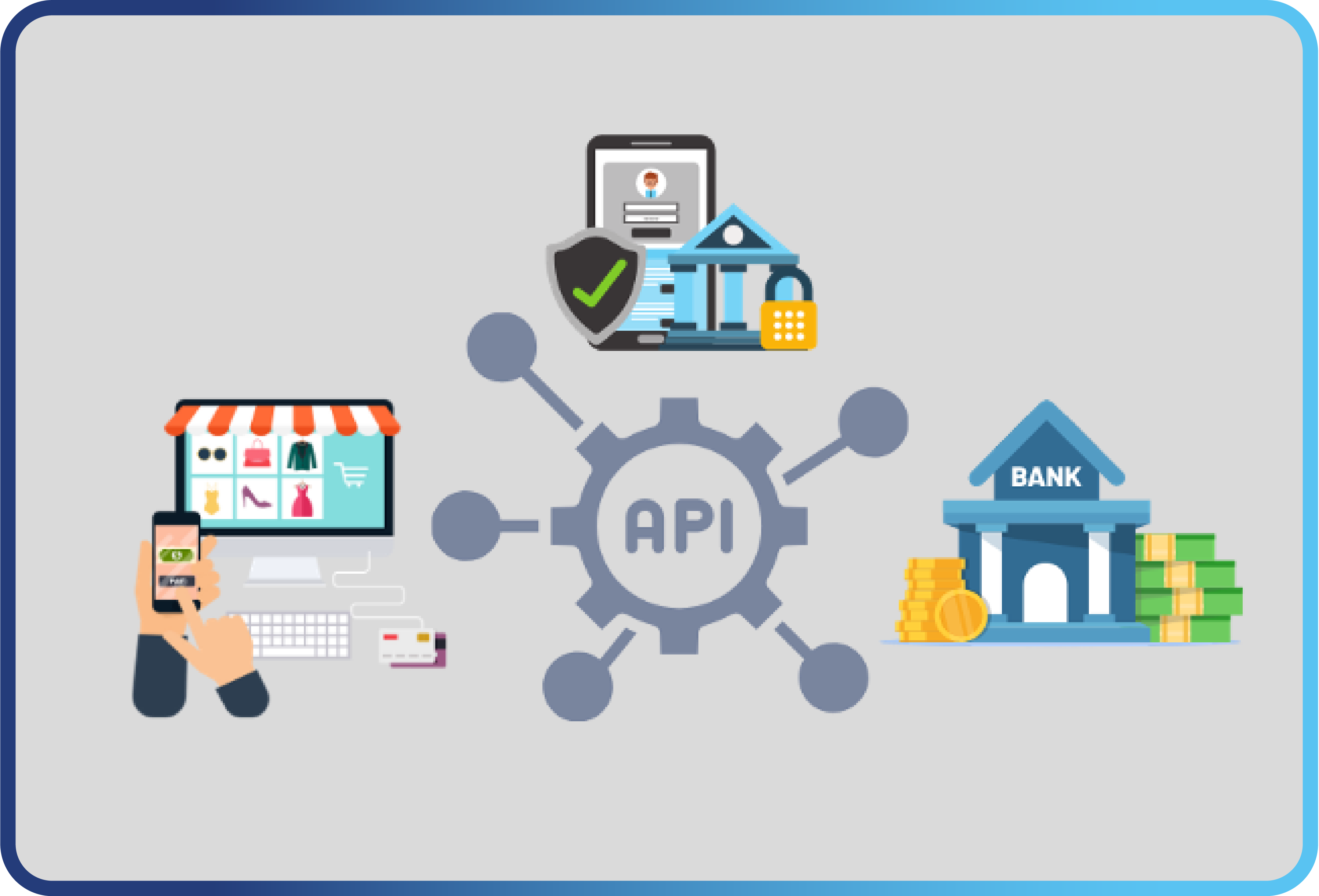
Open finance is a data-sharing and business model approach that enables financial data to be securely exchanged between institutions through APIs, with the customer's explicit consent. Unlike open banking, however, this model is not limited to bank accounts alone.
A wide range of financial information falls within its scope, including insurance, investments, loans, pensions, and even alternative financial assets.
Open finance is built on three fundamental principles:
- Customer ownership of data: The data belongs to the customer, not the financial institution.
- Consent and control: Data sharing is entirely dependent on customer approval.
- API-based integration: The ecosystem operates through standardized and secure interfaces.
This approach enables financial services to become modular and recomposable across different providers.
For more information on this topic, you can explore our article on API Banking and Its Benefits.
The Difference Between Open Banking and Open Finance
The primary distinction between open banking and open finance lies in their scope and strategic impact.
- Open banking focuses on bank accounts and payment systems.
- Open finance encompasses an individual's entire financial life.
While open banking provides services such as account information access and payment initiation, open finance covers a much broader range of data, including investments, loans, insurance policies, pension funds, and more.
This distinction is also highly significant from a business model perspective. Open banking primarily enables integration, whereas open finance unlocks the full potential of the platform economy.
The open banking transformation initiated in Europe through PSD2 is now laying the foundation for open finance through PSD3 and similar regulatory developments.
Financial Services Covered by Open Finance
Open finance creates an ecosystem that encompasses the entirety of an individual's financial life.
Key areas include:
- Bank accounts and payment systems
- Loans and consumer finance
- Investment portfolios and wealth management
- Insurance and risk products
- Pension plans and long-term savings instruments
Thanks to this broad scope, financial services evolve from standalone products into integrated customer experiences.
Benefits of Open Finance for Consumers
The value of open finance is most clearly seen from the consumer's perspective. Global industry research shows that this model is fundamentally transforming customer experience.
Key benefits include:
- A unified financial view: Holistic monitoring of all assets and liabilities from a single interface
- Personalized financial products: More relevant offers powered by data analytics
- More competitive pricing: Cost advantages driven by increased competition
- Faster credit and risk assessments: Accelerated decision-making through real-time data
This model directly supports the growth of embedded finance and platform-based business models.
The Security and Privacy Dimension of Open Finance
The sustainability of open finance depends on its ability to ensure security and data privacy.
In a modern open finance architecture:
- Data sharing occurs only with explicit customer consent.
- Access permissions are controlled by the user and can be revoked at any time.
- API-based structures make data access traceable and auditable.
This approach replaces legacy methods such as screen scraping with more secure and standardized API-based access mechanisms.
In addition, global regulations mandate measures such as Strong Customer Authentication (SCA), data encryption, and standardization, helping establish trust throughout the financial ecosystem.
The Future of Open Finance in Türkiye
Although open finance is still in its early stages in Türkiye, many of the foundational building blocks are already in place.
Today:
- Open banking regulations are overseen by the Central Bank of the Republic of Türkiye (CBRT) and the Banking Regulation and Supervision Agency (BRSA).
- FAST and API infrastructures serve as the digital backbone of the financial system.
- The fintech ecosystem continues to grow rapidly.
Recent developments indicate that the transition from open banking to open finance is accelerating, with insurance, investment services, and digital assets increasingly becoming part of the data-sharing ecosystem.
This evolution has the potential to position Türkiye as a regional hub for the financial platform economy.
One of the most critical requirements for banks during this transition is a scalable, secure, and regulation-compliant API infrastructure. In this context, solutions such as Architecht's Airapi Open Banking and API Management Platform help financial institutions address both today's open banking requirements and tomorrow's open finance needs through a mature and scalable architectural foundation.
Frequently Asked Questions About Open Finance
When Will Open Finance Become a Reality?
Open finance is not a model that becomes operational on a single date. It is a gradual evolution built on top of open banking. In Europe, the journey that began with PSD2 continues to expand through PSD3 and new data-sharing regulations.
Is Open Finance Secure?
Yes. Open finance systems are built upon explicit consent, strong customer authentication, and API security standards. Data sharing remains entirely under user control, and every access event can be tracked and audited.
Is Open Finance a Threat or an Opportunity for Banks?
For institutions that position themselves correctly, open finance represents a significant opportunity. It enables new revenue models, platform partnerships, and data-driven product development. However, organizations that fail to achieve the necessary technologicalce increasing competitive pressure.
Conclusion
Open finance represents a structural transformation of the financial industry. For banks, this shift means moving from producing financial products to orchestrating entire ecosystems.
In today's competitive landscape, success is no longer determined by who offers the best standalone product, but by who can build the strongest platform.
Open finance provides the foundation for that platform economy.
Discover your journey from open banking to open finance with https://architecht.com/en/products/Architecht solutions.