




























 Back
Back
Zero Trust Security Model: A Next-Generation Security Approach in Banking
The financial sector operated for many years with the assumption that “if it is inside the corporate network, it is secure.” However, new structures such as cloud systems, mobile banking, remote work, and banking-as-a-service have largely eliminated these boundaries. Today, the fact that a user is sitting in the office does not necessarily mean that the device they use is secure.
For this very reason, the “zero trust” approach has strongly returned to the agenda. So what is zero trust, and why has it become so critical in the banking world?
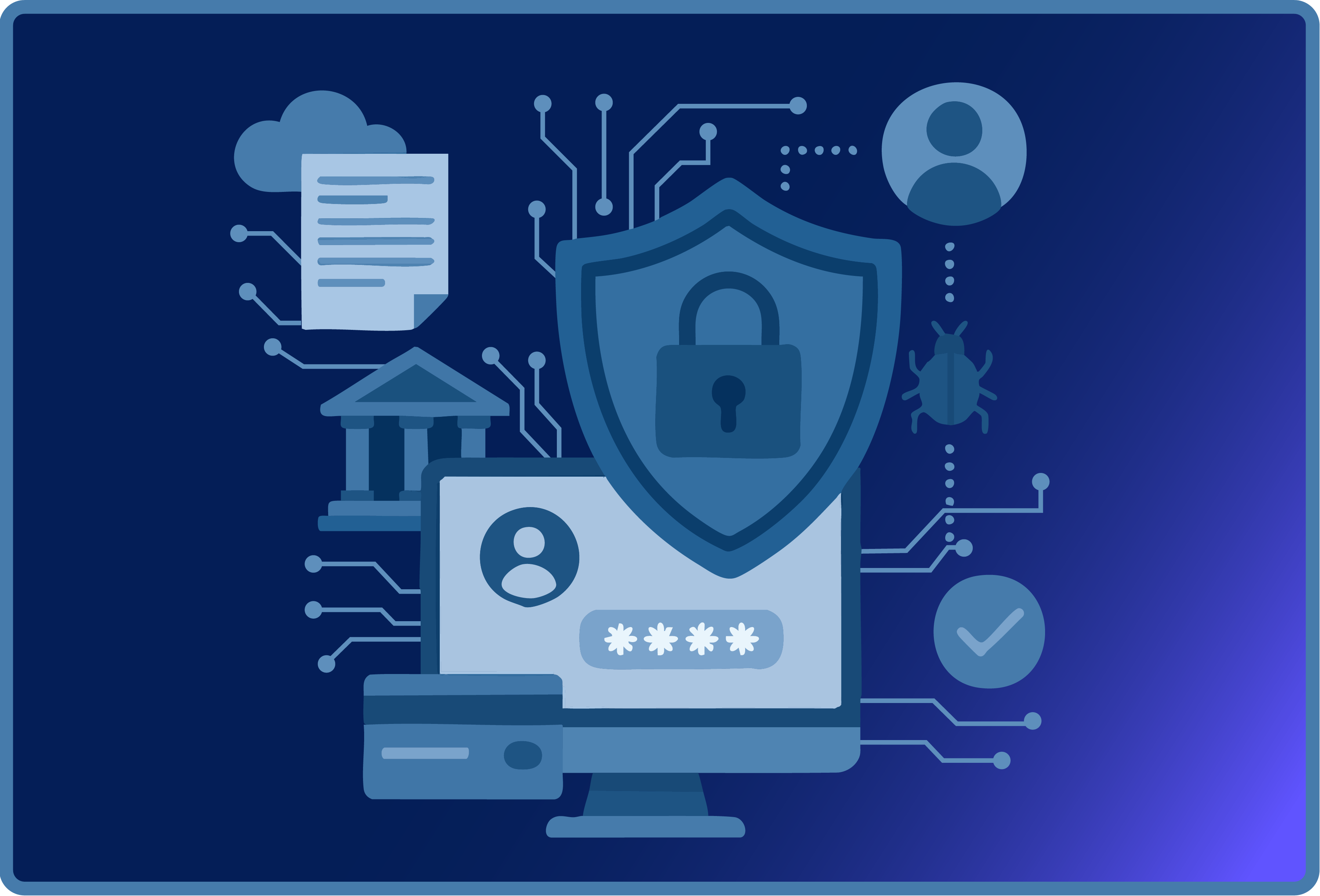
In its simplest form, the zero trust security model is based on never trusting any user, device, or application by default. Even if the user is within the corporate network, their identity, device status, behavior, and access request are continuously verified.
Especially in the digital banking ecosystem, identity verification and access security are becoming more critical. For a broader perspective on this topic, you can also take a look at the article Security in Digitalized Banking.
What is Zero Trust?
The shortest answer to the question “what is zero trust?” is:
“Never trust, always verify.”
The zero trust security model continuously analyzes who the user is, which device they are connecting from, where they are accessing from, and what they want to do. In other words, logging in once is no longer considered sufficient.
You can think of this like airport security checks. Even if you have a ticket, your identity is checked first, then your luggage is scanned, and sometimes you go through additional security screening. The zero trust model operates with a similar logic in the digital world: everyone is checked, and every access is re-evaluated.
This approach becomes especially critical in structures such as mobile banking, open banking, and banking-as-a-service. Because now, not only bank employees but also mobile applications, third-party services, APIs, and partner systems access banking systems. In this regard, the article What is Banking as a Service? can provide useful background.
“Never Trust, Always Verify” Logic
The zero trust security approach is based on three main principles.
The first is the “least privilege” principle. A user or application is granted only the access they need. For example, a call center employee should be able to access only the necessary screens rather than all customer data.
The second is the micro-segmentation approach. The network structure is divided into smaller, controlled zones instead of one large area. This makes it more difficult for an attack to spread throughout the entire system.
The third is the concept of continuous verification. The system monitors not only the moment of login but also risks that arise during the session. If the user connects from a different country, uses a new device, or exhibits unusual behavior, the system may apply additional checks.
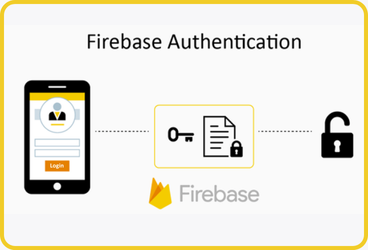
At this point, multi-factor authentication plays a critical role. For more detailed information, you can refer to the article Protect Your Users with Multi-Factor Authentication.
How Does the Zero Trust Security Model Work?
What Does the User See?
From a user’s perspective, the zero trust model may sometimes seem very simple.
Experiences such as requesting additional verification when logging into a mobile banking application, asking for facial recognition when a new device is detected, or sending an SMS confirmation when connecting from a different location are all part of this.
For example, when a bank employee wants to connect to the corporate system from home, a password alone may not be sufficient. The system may also check whether the device is up-to-date, whether a VPN is being used, and the connection location.
On the customer side, risk-based steps progress more invisibly. If a user who normally logs in from Istanbul suddenly has an access attempt from another country, additional verification may be triggered.
What Happens in the Background?
On the side the user does not see, there is a highly intensive analysis mechanism.
Identity signals, device status, session risk, behavioral analysis, and policy engines work together. The system does not only ask “Was the correct password entered?” It also asks “Is this behavior normal?”
For example, if a user who normally only uses reporting screens suddenly starts downloading large volumes of data, the system may detect this as a potential risk.
AI-supported risk analysis is increasingly being used here. In the financial sector, the explainability of decision mechanisms is also gaining importance. In this regard, the article Explainable Artificial Intelligence (XAI): The Invisible Architect of Trust offers a noteworthy perspective.
Why is the Zero Trust Approach Critical in Financial Institutions?
One of the most common risks in the financial sector is phishing attacks. The compromise of a user’s password alone can now pose a major threat.
The zero trust model does not accept the logic that “if the password is correct, everything is fine.” Even if the username and password are correct, access can be restricted if the device is unrecognized or the behavior is suspicious.
This approach has become even more important, especially in remote working environments. The security level of a device used by an employee working from home may not be the same as office devices. The zero trust security model continuously analyzes this difference and helps reduce risks.
Another critical area is third-party access. Fintech partners, integration firms, or suppliers may connect to certain systems. However, granting excessive access can create serious risks. With the zero trust model, such access becomes more controlled, temporary, and traceable.
Call center operations are also a good example. Customer representatives access thousands of sensitive data points every day. The zero trust approach can reduce internal threat risks by continuously monitoring the user’s role, screen-based permissions, and real-time behavior.
Where to Start?
It is generally not possible for an organization to transform its entire structure into a zero trust model at once. Therefore, progressing gradually is a more realistic approach.
The first step is usually identity security. Structures such as multi-factor authentication, device recognition, and session analysis form the baseline. The article Multi-Factor Authentication for Financial Applications addresses this topic in more detail.
At this point, approaches such as PowerFactor Multi-Factor Authentication, which handle mobile application security and MFA infrastructures together, can help financial institutions increase their security level while preserving user experience.
In the following stages, device security, network segmentation, application access policies, and data protection layers are implemented.
Conclusion
The zero trust security model is no longer just a technical security preference; it has become one of the new realities of the digital financial ecosystem.
Today, the fundamental question for institutions is:
“Who is inside?” not,
“Who is accessing what, under which conditions?”
In summary:
- The traditional concept of default trust is being replaced by continuous verification.
- Identity, device, and behavior are evaluated together.
- Stronger protection is provided against phishing, insider threats, and third-party risks for financial institutions.
Because in the digital world, security is no longer ensured by a single wall, but by continuously monitored layers.