




























 Back
Back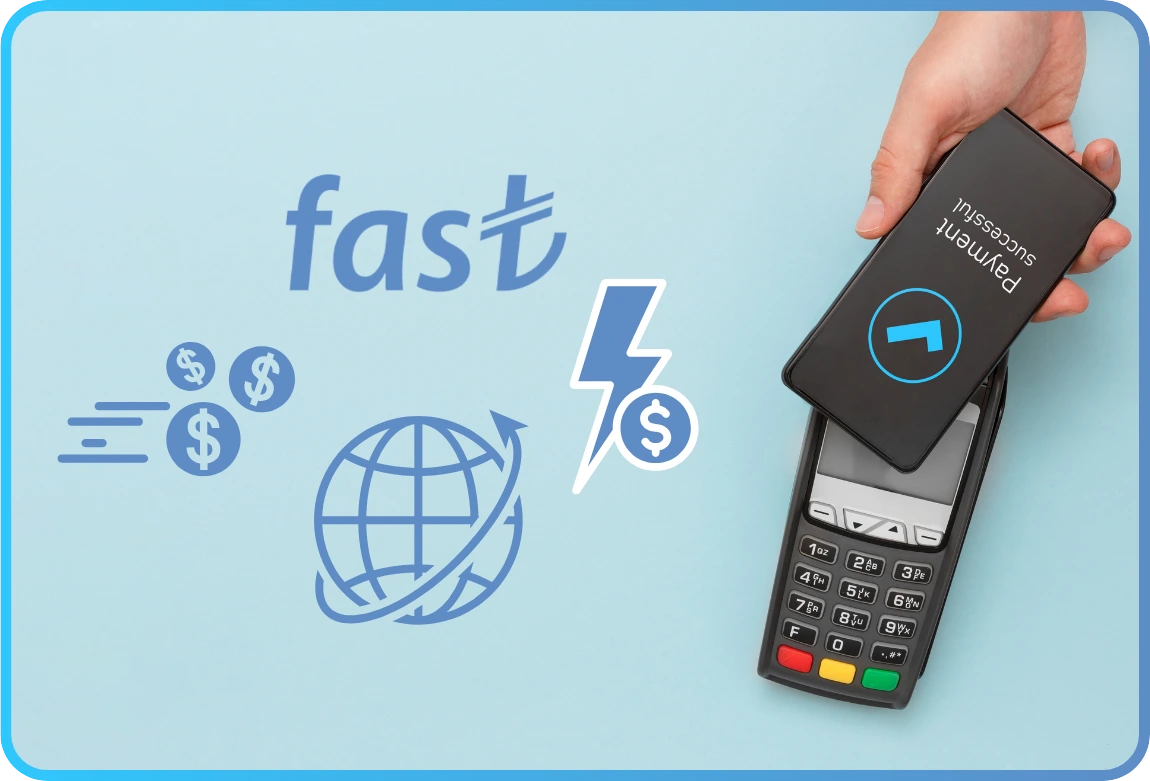
Instant Payment Systems: FAST and Global Examples
Payment systems are among the most critical infrastructure layers of the financial architecture. For banks, payment infrastructure is not merely a technical channel that enables the movement of funds; it directly affects liquidity management, customer experience, operational continuity, regulatory compliance, and digital competitiveness. Therefore, instant payment systems represent a much broader transformation than a speed-oriented innovation in the financial sector.
What Is an Instant Payment System?
An instant payment system is a payment infrastructure in which fund transfers are initiated, processed, settled, and made available in the recipient’s account within seconds. The defining characteristics of these systems are their ability to operate 24/7, provide immediate transaction notifications, and ensure that funds reach the recipient without delay.
In traditional payment infrastructures, transaction flows are often tied to business hours, batch processes, or specific settlement windows. In instant payment systems, however, the payment experience becomes independent of the concept of a business day. While this means speed and convenience for individual users, it creates a more complex operating model for banks. Payment infrastructures are no longer considered back-office functions but competitive platforms at the center of banks’ digital strategies. Therefore, instant payments are not only a matter of technical integration but also of strategic positioning.
What Is the FAST System and How Does It Work?
FAST (Funds Transfer Instantly and Continuously) is a next-generation payment system developed by the Central Bank of the Republic of Türkiye that enables instant payments 24/7 across the country. The CBRT launched the FAST system on January 8, 2021, positioning it as a key component of Türkiye’s payment ecosystem digitalization strategy.
The FAST transaction flow consists of several steps. The sender initiates a payment instruction. The sending financial institution forwards this request to the FAST system. FAST routes the transaction to the receiving financial institution. After completing the necessary checks, the receiving institution returns a payment acceptance confirmation to the system. Once the transaction is completed, the funds are transferred to the recipient’s account, and both parties are informed of the transaction result.
One of FAST’s key components is the Easy Addressing System. The ability to make payments using information such as a phone number, email address, or identity number instead of an IBAN simplifies the user experience. Layered services such as TR QR Code and Request to Pay extend the system beyond person-to-person transfers to commercial payments, e-commerce, bill payments, and corporate collection scenarios.
Global Instant Payment Systems
Global examples show that instant payment systems are shaped by different priorities in each market. Europe’s SEPA Instant stands out with its goal of standardization and interoperability across the euro area. Operating 24/7 and completing transactions within seconds, this structure is becoming a core payment capability for banks throughout Europe.
The United Kingdom’s Faster Payments is one of the earliest successful examples. Introduced in 2008, the system demonstrated how instant payment infrastructure can redefine customer expectations in advanced banking markets. Brazil’s PIX is a powerful example of rapid adoption driven by a central bank initiative. Through QR codes, low-cost usage, and widespread acceptance, it quickly became part of daily payment behavior. India’s UPI demonstrates how instant payments can scale through an application ecosystem with its open platform approach and extremely high transaction volumes.
The common lesson from these examples is clear: success cannot be explained by speed alone. Standardized messaging, API capabilities, user-friendly addressing, secure authentication, regulatory compliance, and participant diversity are all essential for generating sustainable value.
The Difference Between FAST and EFT
Explaining the difference between FAST and EFT simply as “one is faster and the other is slower” is insufficient. The real distinction lies in their operating models and usage contexts.
- Operating hours: While EFT transactions are processed within specific time windows, FAST operates 24/7.
- Transaction speed: In EFT, completion times may vary depending on interbank processes and settlement windows. FAST transactions are completed within seconds.
- Use cases: EFT is largely based on traditional interbank fund transfer structures. FAST supports more agile scenarios ranging from person-to-person payments to QR code merchant payments.
- Addressing: EFT is primarily IBAN-based. FAST simplifies payment initiation through methods such as Easy Addressing and QR codes.
- Limit structure: FAST transactions are executed within limits determined by the CBRT. As of April 4, 2024, the FAST transfer limit was increased to TRY 100,000, while the FAST-TR QR code merchant payment limit was increased to TRY 250,000.
These differences directly influence banks’ channel strategies, risk appetites, customer communication processes, and operational architectures.
Instant Payment Infrastructure for Banks
For banks, transitioning to instant payment infrastructure means much more than integrating with FAST. Core banking systems must be capable of operating 24/7, low-latency API layers must be implemented, instant settlement mechanisms must be designed, and real-time fraud monitoring capabilities must be developed.
From a regulatory perspective, operational resilience, information security, customer data protection, and business continuity are critical priorities. As transaction speed increases, managing errors and fraud risks becomes more sensitive. Therefore, authentication, transaction monitoring, limit controls, blacklist screening, logging, and contingency scenarios must be addressed in a holistic manner.
Payment systems architecture involves much more than money transfers. Card payments, POS solutions, digital wallets, QR payments, fraud management, and merchant management are all components of the same ecosystem. In this context, Architecht’s BOACard Payment Systems Platform provides an end-to-end infrastructure approach by bringing together modules such as card payment systems, POS products, merchant management, digital wallets, QR codes, and fraud management under a single platform.
For readers who would like to explore the fundamental concepts of money transfers in greater depth, the article A to Z Money Transfer provides an explanatory perspective on FAST, EFT, wire transfers, SWIFT, and Easy Addressing.
The Future of Instant Payments
The future of instant payments will be shaped by three key dimensions: open banking, digital wallets, and the data economy. Open banking enables secure payments through payment initiation services across multiple channels. Digital wallets make instant payment infrastructure a natural part of everyday commerce. The data economy transforms the payment moment into a valuable source of insight for customer behavior analysis, risk analytics, and personalized financial services.
For banks, competition will no longer be based solely on executing payment transactions. Future differentiation will depend on who controls the payment experience, the context in which value is delivered to customers, and how quickly ecosystem partnerships can be implemented. Examples such as FAST, SEPA Instant, Faster Payments, PIX, and UPI show that speed has rapidly become a standard. The next differentiators will be trust, integration capabilities, open architecture, and data-enriched service models.
Frequently Asked Questions About Instant Payment Systems
Does FAST operate 24/7?
Yes. FAST is designed to operate every day of the week and every hour of the day. This allows money transfers to be completed regardless of business hours, weekends, or public holidays.
Are there limits on instant payments?
Yes. FAST transactions are subject to limits determined by the CBRT. Under the current framework, the FAST transfer limit is TRY 100,000, while the FAST-TR QR code merchant payment limit is TRY 250,000.
How do banks transition to instant payments?
Transitioning to instant payment infrastructure requires the coordinated design of core banking systems, API management, FAST integration, instant settlement capabilities, real-time fraud monitoring, security controls, and regulatory compliance processes.
Are instant payments secure?
Instant payment systems operate through participant authentication, transaction limits, customer approval mechanisms, security controls, and risk monitoring processes managed by financial institutions. However, as transaction speed increases, the security architecture must also function in real time. Therefore, strong authentication, behavioral analytics, and continuous monitoring are critical for banks.
References
- https://routefusion.com/blog/real-time-payments-by-country
- https://fast.tcmb.gov.tr/
- https://www.tcmb.gov.tr/wps/wcm/connect/TR/TCMB+TR/Main+Menu/Duyurular/Basin/2022/DUY2022-13
- https://www.openbankingtracker.com/payment-schemes
- https://architecht.com/en/products/boacard-payment-systems-platform/
- https://architecht.com/kurumsal/blog/acik-bankacilik/adan-zye-para-transferi/